What to Wear in Fall: A Simple Layering Guide for Changing Weather
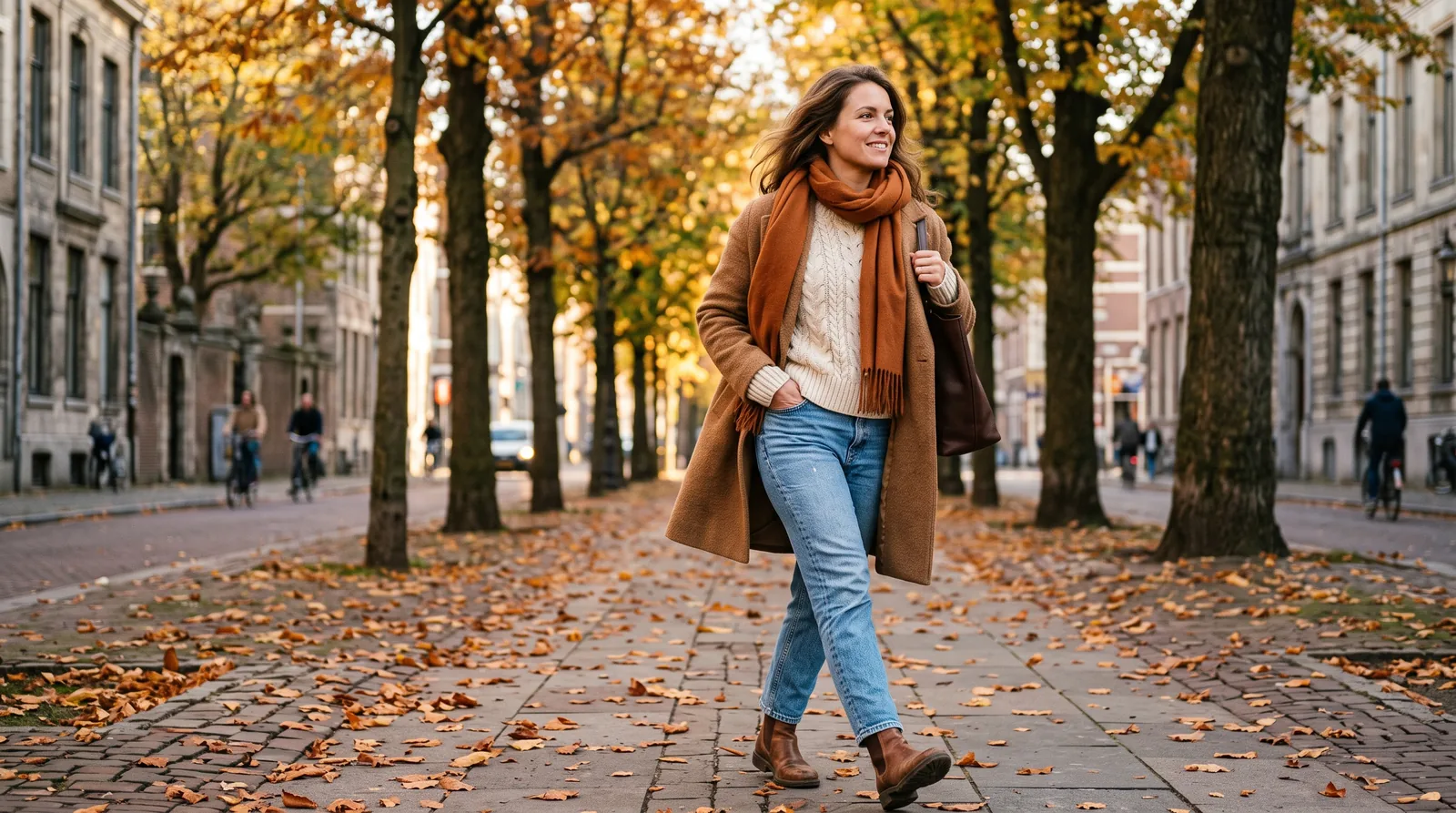
Fall is the hardest season to dress for. A morning that needs a coat can turn into an afternoon where that coat is something you carry around for six hours. The answer is not a perfect single outfit. It is layers you can add and remove as the day changes.
This guide walks through a simple layering system, the handful of pieces that make it work, and how to plan around the forecast so you are not guessing at 7 a.m.
Why Fall Is So Hard to Dress For
In many cities the gap between the morning low and the afternoon high is 10°C or more in October. Add wind, a rain shower and heated offices, and one outfit has to cover three or four different conditions. Heavy single pieces (a thick sweater with nothing underneath, a winter coat) are either too warm or not warm enough most of the day.
The Three-Layer System
Outdoor clothing brands have used this idea for decades, and it translates neatly to everyday dressing:
- Base layer: what touches your skin. A cotton or merino t-shirt, a fine-knit long sleeve, a light shirt. It should look finished on its own, because on a warm afternoon it might be all you wear.
- Mid layer: the warmth. A crew-neck or V-neck knit, a cardigan, an overshirt or a light quilted vest. This is the layer you take on and off most.
- Outer layer: protection from wind and rain. A trench, a wool coat, a waxed or water-resistant jacket. Choose it for the coldest part of your day, not the average.
Pieces Worth Having
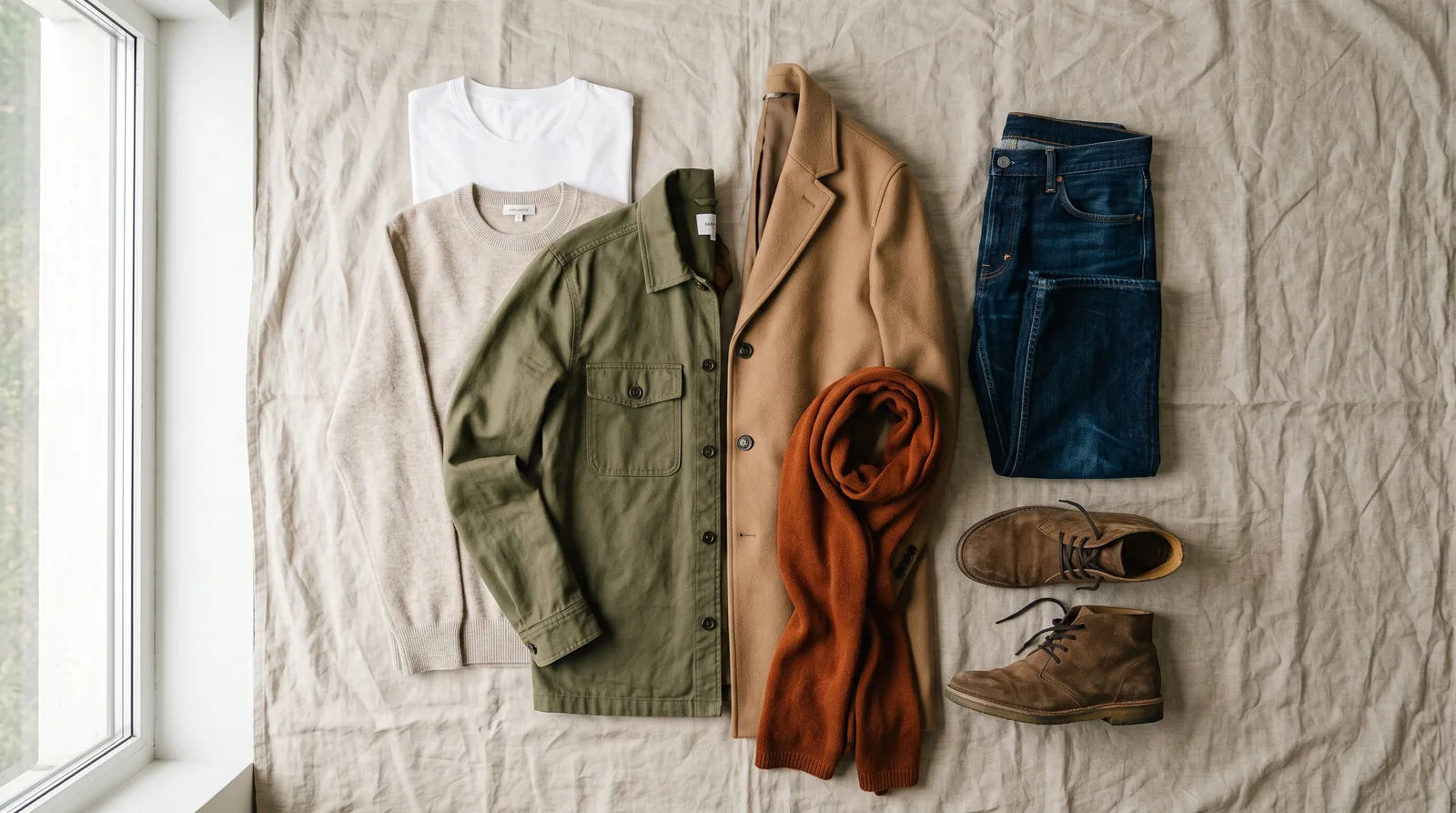
You do not need a new wardrobe for fall. Most people already own most of these; the gaps are usually one good mid layer and one versatile coat.
- Two or three plain t-shirts or fine long sleeves in neutral colors
- A medium-weight knit (merino or a wool blend) that fits under your coat without bunching
- An overshirt or shacket: warmer than a shirt, lighter than a jacket
- One coat that works with both jeans and smarter trousers
- A scarf: the cheapest way to add or remove a lot of warmth
- Closed shoes or ankle boots that handle wet pavements
Fabrics: What Actually Keeps You Comfortable
Wool and merino stay warm when slightly damp and handle temperature swings well, which is why they are worth the higher price for a mid layer. Cotton is comfortable as a base layer but holds moisture, so it is less pleasant if you get caught in the rain. Fleece is warm and light but tends to look casual. For the outer layer, a tightly woven or water-resistant fabric matters more than thickness: wind is what makes a cool day feel cold.
Fall Color Combinations That Work
- Camel and cream: soft, warm and easy to wear with denim
- Olive and rust: earthy and seasonal without looking like a costume
- Navy and grey: the safe, smart option for work
- Chocolate brown and blue denim: casual and a little unexpected
- Burgundy with charcoal: richer for evenings
A simple rule: keep the large pieces (coat, trousers) neutral and bring color in through the knit or the scarf. That way one coat works with everything underneath it.
Plan Around the Forecast, Not the Calendar
The easiest way to dress well in fall is to decide the night before, with the forecast open. Check the low, the high and the chance of rain, then pick the outer layer first and build inwards.
If your clothes are in FitInView, Daily Style does this for you: it checks your local weather and suggests outfits from the clothes you already own that suit the day's temperature. Daily suggestions do not use any credits.
Common Layering Mistakes
- A bulky knit under a slim coat: the coat pulls across the shoulders and the knit bunches at the wrists
- A base layer you would not want to be seen in: if it is too warm to keep the knit on, you are stuck
- Everything the same weight: three medium layers are harder to adjust than a light, a medium and an outer layer
- Ignoring shoes: wet canvas sneakers make a well-layered outfit feel miserable by noon
Get these right and fall becomes the most fun season to dress for: you can wear more of your wardrobe at once than at any other time of year.