How to Plan Your Outfits for the Week (Stress-Free)
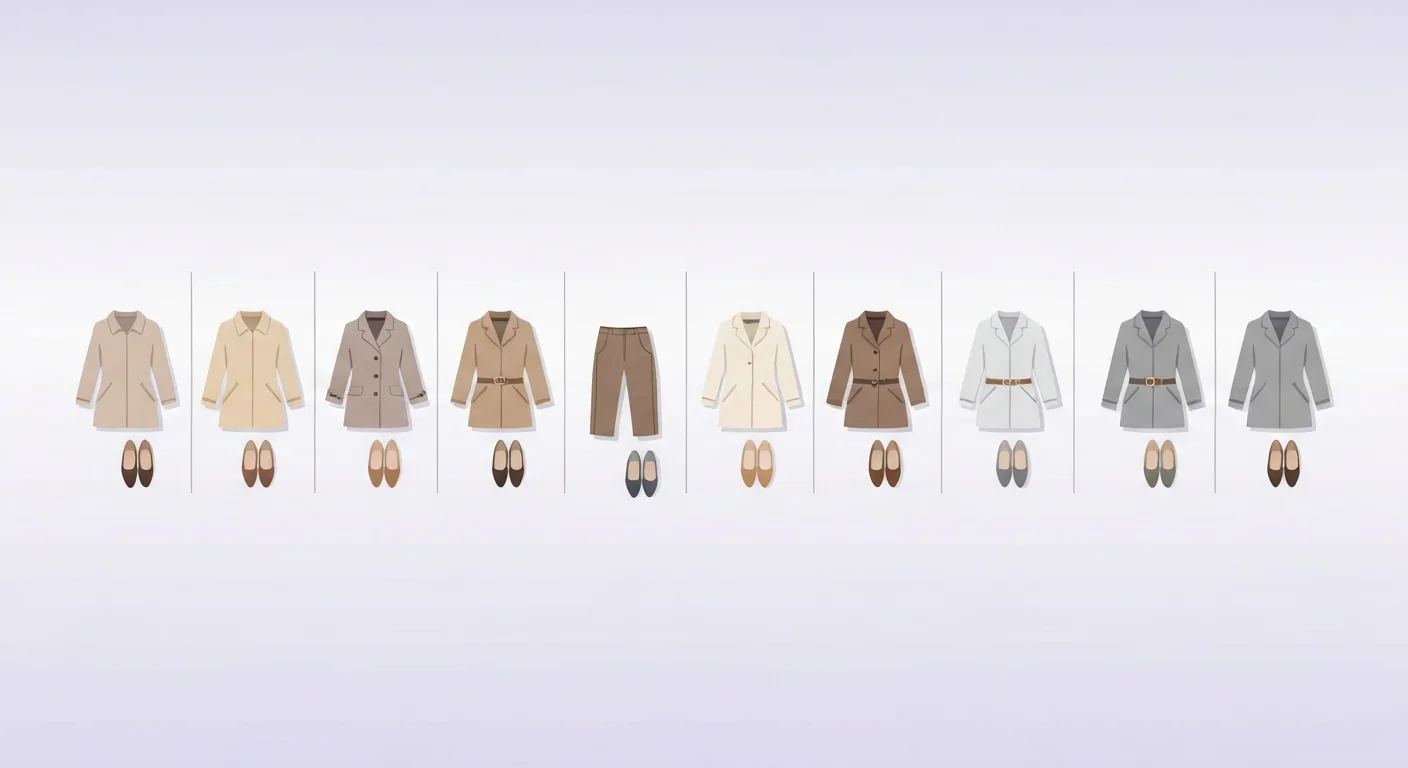
Deciding what to wear every morning is a small tax on your time and energy — one that adds up. Planning your outfits for the week removes that decision when you are least equipped to make it (half-awake, running late) and moves it to a calmer moment when you can actually enjoy it. It also has a side benefit: you end up wearing far more of your wardrobe instead of cycling through the same five things.
Here is a simple, repeatable system for planning a week of outfits without it becoming another chore.
Why Plan Outfits Ahead?
- Faster mornings — no staring into the closet
- Fewer “I have nothing to wear” moments (you usually do; you just cannot see it)
- Better use of your whole wardrobe, not just the front of the closet
- Less last-minute laundry panic when a key piece is dirty
- Confidence — you already know the outfit works
Step 1: Check the Week Ahead
Start with context. Glance at your calendar and the weather forecast for the next seven days. A week with a client meeting, two gym sessions, and a dinner out needs different outfits than a week working from home. Weather matters just as much — there is no point planning a linen dress for a cold, rainy Tuesday.
Some apps do this automatically. FitInView's daily outfit suggestions factor in the local weather and your calendar to propose outfits from clothes you actually own — see our guide to daily outfit suggestions for how that works.
Step 2: Plan Around Anchor Pieces
Rather than inventing seven outfits from scratch, build each day around one “anchor” — a standout piece or the item the day demands (a blazer for the meeting, comfortable layers for the gym-and-errands day). Then fill in around the anchor with your versatile basics. This is far faster than facing a blank slate each morning.
Step 3: Build and Preview Each Outfit
This is the step that used to require physically laying clothes on the bed. Now you can do it digitally. With an outfit builder, you drag pieces from your digital closet onto a canvas and see them together instantly; with virtual try-on, you can see the full look on yourself. That means you catch the outfits that do not actually work — before Monday morning, not during it. Our outfit builder guide shows the workflow.
Step 4: Assign Outfits to Days (Loosely)
Map your planned outfits to the days of the week, but hold them loosely. Life changes; a plan you cannot adjust is a plan you will abandon. Think of it as a menu, not a mandate — if Thursday's outfit does not match your mood, swap it with Saturday's. The point is to have good options ready, not to lock yourself in.
Step 5: Check What Needs to Be Clean
Nothing derails a plan like discovering your planned shirt is in the laundry. Once your week is mapped, do a quick check that the pieces you need are clean and ready. Planning ahead gives you time to run a wash — something you cannot do at 7:45 a.m.
A Simple Weekly Routine
| When | What to do | Time |
|---|---|---|
| Sunday evening | Check calendar + weather for the week | 2 min |
| Sunday evening | Pick an anchor piece for each day | 5 min |
| Sunday evening | Build and preview outfits digitally | 10 min |
| Sunday evening | Note anything that needs washing | 2 min |
| Each morning | Wear the plan (or swap freely) | 0 min |
Under 20 minutes on a Sunday buys you a week of effortless mornings. Once it becomes a habit, it barely feels like planning at all.
The Bottom Line
Planning your outfits for the week is one of the highest-return habits in your day-to-day life: a small, calm investment on the weekend that pays off every rushed morning. Check the week ahead, build around anchor pieces, preview the looks digitally so you know they work, and stay flexible. With a digital wardrobe and outfit tools, the whole process takes just minutes each week — and you will finally wear all those clothes you forgot you owned.